The Origins and Evolution of Japanese Denim: History, Iconic Brands, and Characteristics
Gianfilippo Cisternino
Japanese denim is now considered one of the best in the world for its quality, durability, and craftsmanship. But its origins trace back to a specific historical moment, right after World War II, when the first American jeans arrived in Japan with U.S. soldiers.
The Origins of Japanese Denim
Japanese denim was born in the post-war period when American soldiers stationed in Japan brought with them jeans, indigo jackets, and work clothes. These garments began to circulate in the markets of Tokyo, Osaka, and Yokohama, arousing curiosity among local artisans.
That rough, durable, worn fabric wasn’t just an unfamiliar material: it was a culture to observe, dismantle, and reinterpret.
Japan already had a long textile tradition based on handlooms, natural dyes, and artisan precision. The first producers began to analyze American jeans in every detail: the herringbone weave, the thickness of the cotton, the stitching, and the use of indigo. The initial experiments were complex: they used local yarns mixed with imported cotton, retrieved shuttle looms from the 1950s, and experimented with multiple dye baths.
From this pioneering phase did not arise a simple imitation of American denim, but a new textile language: Japanese denim, with its own identity.
The Pioneers: BIG JOHN and the 70s
The first real brand of Japanese jeans was BIG JOHN, founded by Saburo Adachi. As early as 1951, they started producing jeans assembled in Japan inspired by American models, but made with carefully selected materials and great attention to detail.
In the 1960s, BIG JOHN was one of the first to use denim entirely produced in Japan, marking a historic turning point for the local industry.
In the 1970s, the interest in jeans exploded: young people, influenced by American culture, began transforming those work clothes into cult items. Small workshops and independent factories recovered old shuttle looms, preferred over modern industrial machines because they produced a more irregular, durable fabric with more character.
It was in this decade that the philosophy that still defines Japanese denim took shape: slowness, precision, and loyalty to traditional methods.
The Osaka Five
At the end of the 1970s, in the Osaka region, five brands emerged that would revolutionize modern Japanese denim. Today they are known as the Osaka Five:
- Studio D’Artisan
- Warehouse
- FULLCOUNT
- Denime
- Evisu
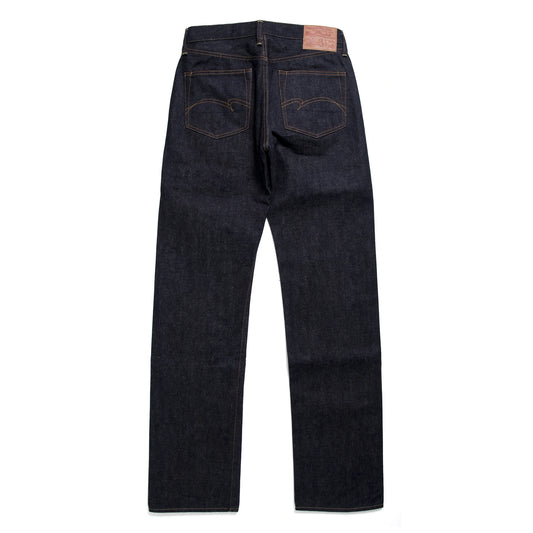
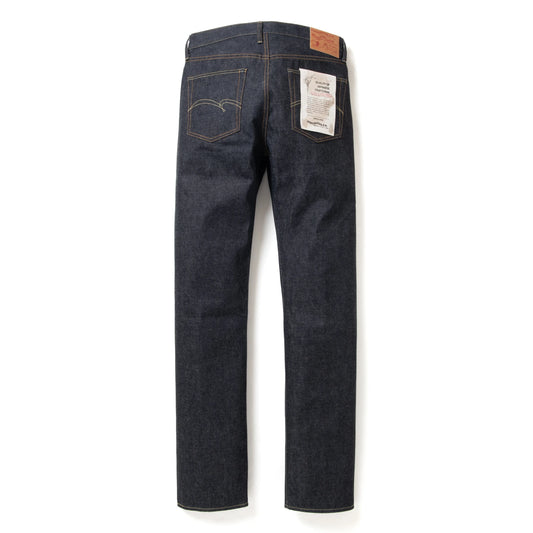
Studio D’Artisan (1979) was the first to produce jeans in true raw Japanese denim, inspired by vintage American models. Following that, Warehouse, Fullcount, Denime, and Evisu were born, each with a unique philosophy: some focused on historical accuracy, others on the softness of yarns, and others creatively reinterpreted details.
However, all shared the use of shuttle looms, deep indigo, and a maniacal attention to stitching, rivets, and leather details.
From Osaka, a revolution began that defined the concept of premium denim: authentic selvedge, irregular fabrics rich in slubs, hand washes, and constructions designed to last decades.
The Characteristics of Japanese Denim
What makes Japanese denim unique is its meticulous attention to detail and materials. Here are the distinctive elements:
1. Thick and Irregular Yarn
The cotton used is often more substantial compared to that of modern industrial denim, with irregularities (slubs) that give texture and character to the fabric.
2. Weaving on Shuttle Looms
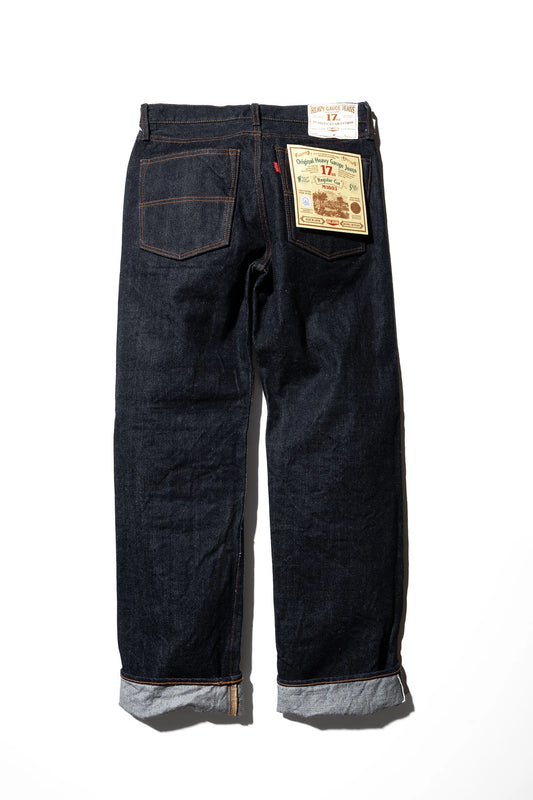
Shuttle looms produce only a few meters of fabric per day but ensure a denser weave and the typical finished edge, the famous selvedge recognizable by the colored thread inside.
3. Natural or Traditional Indigo Dyeing
The fabric is dipped many times in indigo vats — often natural — to achieve a deep, uneven blue that will fade uniquely over time.
4. Evolution with Use
When first worn, Japanese denim is stiff and structured. Over time, it molds to the body, softens, and develops personal fading on the thighs, knees, and pockets.
Each crease tells the story of the wearer, making the jeans unique and one-of-a-kind.
The Best Japanese Denim Brands
It’s difficult to speak of "the best" in an absolute sense because each brand interprets denim differently. However, these brands are globally recognized as landmarks:
- Studio D’Artisan
- Warehouse
- FULLCOUNT
- Denime
- Evisu
- Momotaro
- Oni Denim
- Pure Blue Japan
- BIG JOHN
- The Flat Head
All share a philosophy based on yarn quality, craftsmanship, and longevity. Prices are higher compared to industrial denim, but they reflect the meticulous craftsmanship and longevity of the garment.
A good pair of Japanese jeans improves with age, becoming more comfortable and developing a patina that is impossible to replicate artificially.
More Than Just Jeans
Wearing Japanese jeans means carrying with you a tradition based on slow craftsmanship, authentic raw materials, and respect for time. It’s not just fashion, but a philosophy of clothing: less consumerist, more personal.
As an ancient Japanese concept teaches, beauty lies in transformation. Japanese denim perfectly embodies this idea: it starts stiff and impeccable but becomes authentic only through use.
That’s why it’s never just a pair of pants: it’s a story to wear.